














ANGLE
0,00 €| row | size | Thickness | length(m) | weight of each branch | the number of branch per bounch |
| 1 | 3*30*30 | 3 | 6 | 8 | 250 |
| 2 | 3*40*40 | 3 | 6 | 11 | 181 |
| 3 | 4*40*40 | 4 | 6 | 14 | 142 |
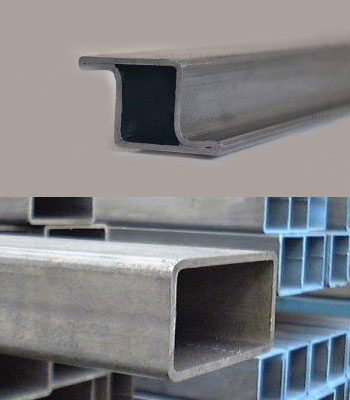
Black profile
0,00 €| row | size | Thickness | weight(tone) | length(m) |
| 1 | 10*20 | 2 | 5 | 6m |
| 2 | 10*30 | 2 | 7.5 | 6m |
| 3 | 20*20 | 2 | 7 | 6m |
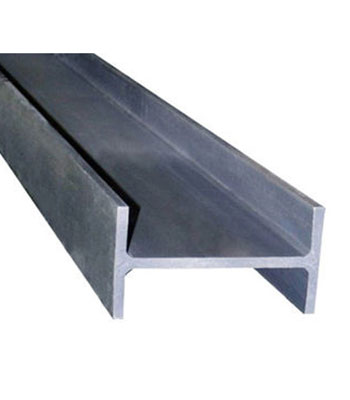
ipe beam
0,00 €| row | size | length(m) | weight(tone) | the number per bounch |
| 1 | 12 | 12m | 125 | 44 |
| 2 | 14 | 12m | 105 | 36 |
| 3 | 14 | 12m | 125 | 36 |

Family of Eco-friendly Nanoemulsion Cleaners
0,00 €Introduction
A detergent is a surfactant or a mixture of surfactants with cleaning properties in dilute solutions. Detergents are commonly available as powders or concentrated solutions. An emulsion is a mixture of two or more liquids that are normally immiscible (unmixable or unblendable). Emulsions are part of a more general class of two-phase systems of matter called colloids. Nanoemulsions are emulsions in which the droplet sizes are less than 100 nm. A typical nanoemulsion contains oil, water and an emulsifier. Since microemulsions are thermodynamically stable systems in equilibrium, they are sensitive to changes in temperature and composition. Therefore, nanoemulsions are attractive for aforementioned applications because they are relatively the least sensitive to physical and chemical changes and they can be kinetically stable over long time scales. This product is an alcohol free nanoemulsion that is used as a detergent for cleaning and polishing a variety of surfaces. The products made by this company are as follows:
- Antibacterial cleaner spray for tablet and mobile
- Glass cleaner spray
- Multifunctional cleaner solution
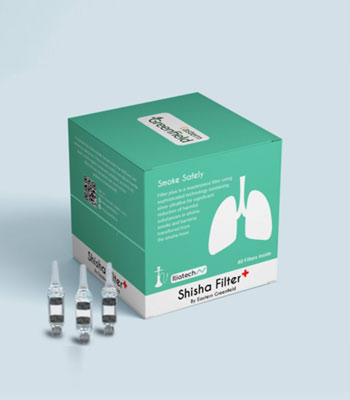
Filter Plus
0,00 €Introduction
Filter plus is a masterpiece filter using sophisticated technology containing silver nanoparticles for significant reduction of harmful substances in shisha smoke and bacteria transferred from the shisha hose. Disposable oral hookah filters cause a remarkable decrease in harmful hookah smokes.
This filter with its Nanoparticles can absorb and separate particles existing in hookah smoke. So far, more than 4,000 chemicals have been found in tobacco that contains compounds such as nicotine, free radicals, harmful gases, volatile organic compounds, aldehydes, aromatics, etc. Most of these compounds cause problems such as cancer and vascular heart disease.

Antibacterial Hospital Waste Bag
0,00 €Introduction
The use of plastic bags is a convenient and hygienic way to collect waste. Plastic bags are very lightweight, and are especially suitable for wet rubbish like food waste. The waste bags containing food waste and other spoilable materials are a suitable place for growth of bacteria which can cause contamination. The antibacterial nanoparticles prevent the growth of microorganisms which lead to contamination. The antibacterial nanoparticles prevent growth of microorganisms which give birth to spoilage and contamination. Zinc oxide nanoparticles show a strong antibacterial activity against the pathogenic bacteria such as E. coli and S. aureus. Addition of these kinds of nanoparticles to the waste bags can create antibacterial properties in them.
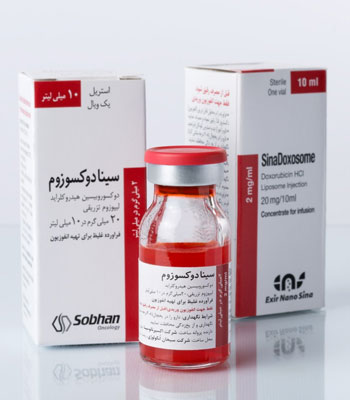
Anti-cancer Drug (SinaDoxosome)
0,00 €Introduction
This product is SinaDoxosome containing liposomal hydrochloride doxorubicin. Its formulation is in a way that inserts doxorubicin into the nanoliposome carriers and increases permeability and retention of the drug in the tumor tissue. This lipid carrier decreases the side effects of doxorubicin due to the small amount of leakage. In this way cardiac toxicity of the drug that is the most dangerous side effect is significantly reduced. SinaDoxosome is used in the treatment of various cancers and because of the high efficiency of its liposomal nature, it has significant effect on metastatic cancers including metastatic breast, ovarian cancers as well as multiple myeloma and AIDS-related Kaposi’s sarcoma.
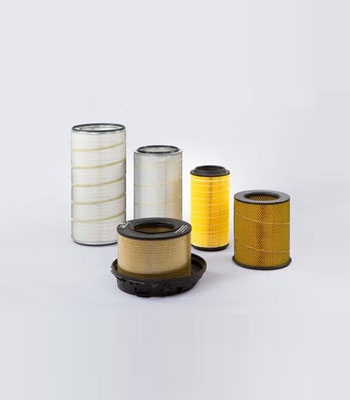
Gas Turbine Air Filter0
0,00 €Introduction
Proper air filtration is critical to the overall performance and reliability of gas turbines. The latest evolution in the filtration industry is the use of nanotechnology in this field. With this technique, the surface of large cellulosic or synthetic textiles (usually 10 to 30 micrometers in diameter) is covered with a layer of ultra-fine textiles (typically 50 to 400 nanometers in diameter). There are two different methods for separating particles in the filter paper structure.
In-depth filtration, in which particles are separated in different layers of paper according to their size; and surface filtration, in which all particles are separated on the surface of paper. In Behran Co. before pleating process, the filter paper is covered with a layer of Polyamide textiles with diameter of less than 100 nanometer by using electrospinning process.
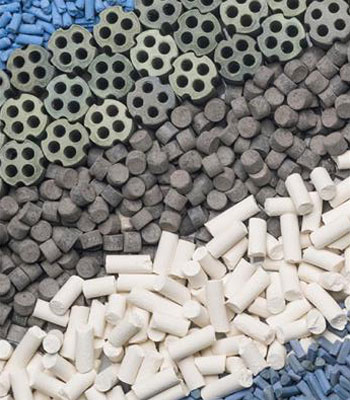
Desulfurization Catalyst containing Zinc Oxide Nanoparticles
0,00 €Introduction
Sulfur compounds are one of the main pollutants of the air and chemical processes which damage human health, water resources, catalysts and other devices. Removing sulfur compounds is one of the main processes in fossil fuel applications. Various inorganic sorbents are used to remove H2S in such applications. Among sorbents, zinc oxide is one of the most important sorbents for removal of H2S at moderate temperatures. This advantage is due to the fact that the thermodynamics of the ZnO-H2S reaction is more favorable than other desulfurizing sorbents and also has a higher sulfur absorption capability. Nanotechnology, relying on its unique features, has improved the performance and properties of the products.
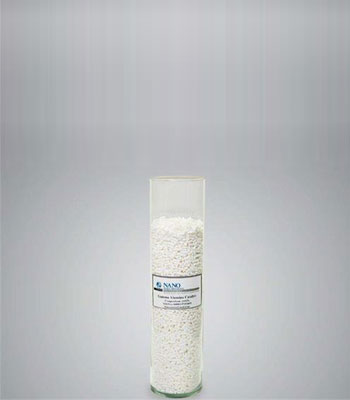
Desulfurization Nanocatalyst
0,00 €Introduction
Oxides of sulfur and nitrogen are the main air pollutants that are also responsible for acid rain. Excessive sulfur content in petroleum fractions such as naphtha, in addition to causing air pollutants, can corrode tanks, reactors, pipes and fittings. Currently desulfurization is carried out using desulphurization catalysts adjacent to hydrogen; thus at a certain temperature and pressure, as well as a specific proportion of hydrogen, sulfur atoms convert to hydrogen sulfide. Catalysts based on γ–alumina are commonly used for desulphurization. Alumina has various applications including ceramic membranes, paints, refinery and chemical catalysts, pollution control and base catalyst. The mesoporous γ–alumina with pore diameter in the range of 2 to 50 nm due to its high specific surface area, high porosity, good thermal stability and suitable pore distribution is used as the most common base catalyst in desulphurization.
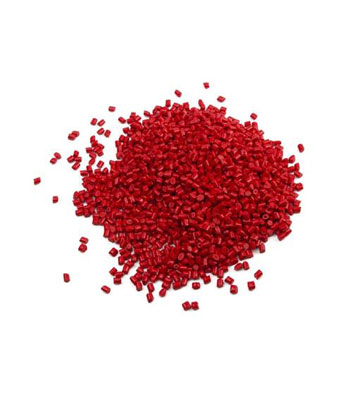
Antibacterial ABS Granule
0,00 €Introduction
ABS polymer is composed of three different monomers, including Acrylonitrile, Butadiene and Styrene, in which each monomer gives unique properties to the final product. Some of these properties are transparency, flexibility, and polarity and chemical resistance which are created by styrene, butadiene, and acrylonitrile, respectively. Therefore, by changing the percentage of each monomer in composition, several grades of ABS can be produced. This material has different applications such as plastic parts that are used in home appliances. ABS masterbatch granules are produced using modified antibacterial nanomaterials. To gain better properties which facilitate the use of ABS in fabrication of components with antibacterial feature, this material can also be mixed with other polymers, such as polyvinyl chloride or polycarbonate.

Golden Steel Sheet for Facades
0,00 €Introduction
The design of the facade is of great importance in every building, because it is the first part of the building to be exposed, and it will be very effective in creating the initial mentality of someone who enters the building. The use of special designs and colors in interior and exterior decoration is welcomed by manufacturers and buyers. One of the more recent designs is the use of golden elements made of stainless steel with TiN golden coatings. These ceramic coatings, in addition to the strength and mechanical properties, provide good corrosion resistance. There are different methods to apply TiN coatings on substrates. Arc-PVD is a kind of physical vapor deposition technique in which an electric arc is used to vaporize material from a cathode target. The vaporized material then condenses on a substrate and forms a thin film.
