














Crasher
0,00 €Shredder produces in two models for crushing non-infectious hospital waste and recycling industry

Yoghurt
0,00 €| Model : | – |
| Description : | Dough types: Mint, Plain, Shallots,Grilled,Traditional, kefir |
| Company name : | Pegah Esfahan Co |
| Packaging : | PET Bottle |
| Minimum order : | 1 |
| Standard : | – |
| Production power : | – |
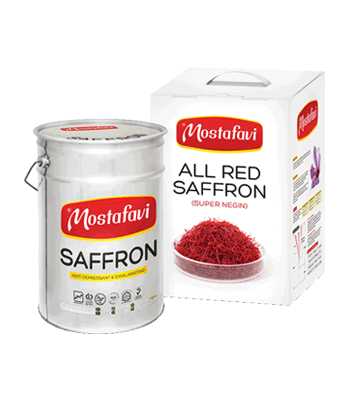
(Super Negin) 2000gr
0,00 €| Product name | (Super Negin) 2000gr |
| Product Code | 30010053 |
| GS1 | 6260634901973 |
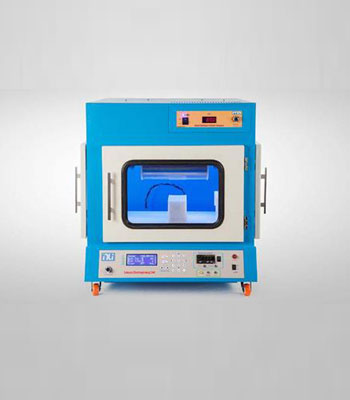
Lab-scale Electrospinning Unit
0,00 €Introduction
The Lab-scale Electrospinning Unit is the laboratory electrospinning equipment for efficient research and experimental work in the field of nanofibers. This system makes use of electrostatic and mechanical force to spin fibers from the tip of a fine spinneret. The spinneret is maintained at a positive or negative charge by a DC power supply. When the electrostatic repelling force overcomes the surface tension force of the polymer solution, the liquid spills out of the spinneret and forms an extremely fine continuous nanofiber.

Lab Electrospinning Unit
0,00 €Introduction
Lab Electrospinning Unit is a full-automatic laboratory electrospinning instrument which is able to produce different polymer nanofibers. This system makes use of electrostatic and mechanical force to spin fibers from the tip of a fine spinneret. The spinneret is maintained at a positive or negative charge by a DC power supply. When an applied electrostatic charge overcomes the surface tension of the solution, the polymer jet is formed. A rapidly rotating collector results in aligned nanofibers while stationary collector results in randomly oriented fiber mats.

Colloidal Silver Nanoparticles
0,00 €Introduction
Colloidal silver is a mineral solution containing silver ions and small charged particles which are suspended in a liquid medium. When the particles have the same electrostatic charges, they repel each other; this creates a uniform suspension of particles throughout the medium. Although silver ions are important, a 100% solution of silver ions is not colloidal silver. Various names have been used to describe colloidal silver, such as silver sols. Sometimes colloidal silver is also called Nano Silver, which contains particles in the range of 1 to 100 nm.

Utensils with Golden Nanostructured Coating
0,00 €Introduction
- Tray
- Tea set
- Salad plate
- Soup bowl
- Catering dish
- Hot drinks holders
- Candlestick
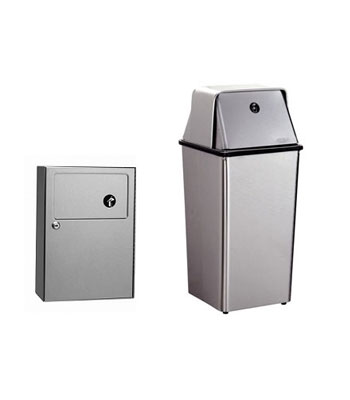
Antibacterial Rubbish Bin
0,00 €Introduction
A waste container is usually made of metal or plastic. These containers are made of polymers such as polypropylene (PP). Because of having a low production cost, PP has a broad range of applications. The use of antimicrobial PP which is a class of polymers with antibacterial activity has been continuously increased. This is due to the fact that the polymer materials can be easily surrounded by bacteria or fungi, which consequently results in the transmission of diseases and severe infections. Prevention of microbial colonization onto the polymeric surfaces can be fulfilled by adding active antimicrobial agent like silver nanoparticles into the polymers. Silver ions and its compounds are extremely lethal for a wide range of bacteria, whilst they show very low toxicity for human cells. It should be noted that the polymer-silver nanocomposite maintains its antibacterial effect, as if its antibacterial efficiency against a wide variety of bacteria has been widely reported.

Tractor
0,00 €Paddy fields tractors are used to facilitate the preparation of paddy fields by connecting implements such as rotavator and plow, transforming machine (like paddy harvester) and agricultural and preparation operations in dry and paddy fields
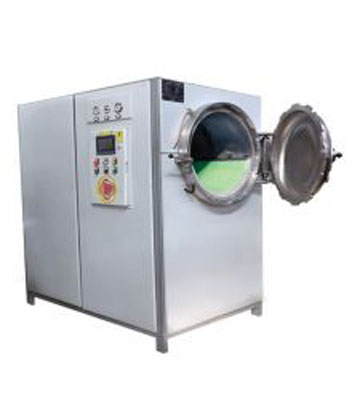
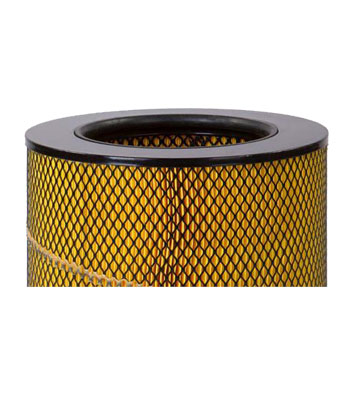
Automobile Air Filter containing Polymeric Nanofibers
0,00 €Introduction

Heavy Vehicle Side Mirror
0,00 €Introduction
Optical mirrors are designed to reflect light in a variety of applications such as light steering, interferometry, imaging, and general applications. These mirrors are widely used in the various industries, especially in the automotive industry. In conventional mirrors, the unwanted light scattering has negative effects on the efficiency and product performance, as far as it reduces the visibility. Nanocoating technology improves the performance of these mirrors, in a way that is minimizing the light scattering.
