






Covitest Rdss Device
0,00 €Introduction
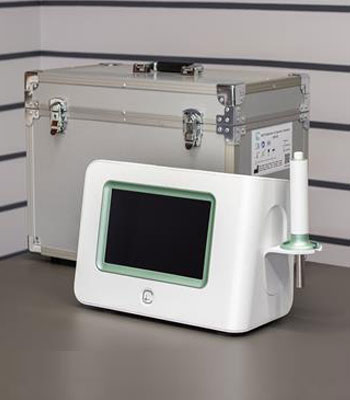
RDSS is a real-time ROS detection system in a fresh sputum sample that contains respiratory and inflammatory cells (active for ROS production) with the assistance of an electrochemical sensor including a nanostructured material sensitive to ROS. The device has the certificate indicated in letter No. 664/46323 issued on 05/13/99 from the Medical Equipment Department of the Ministry of Health of the Islamic Republic of Iran. This system is suitable for screening normal people without clinical symptoms or with mild symptoms to warn against quarantine and additional tests for COVID-19, as well as for the use of acute and chronic respiratory diseases based on ROS sputum.
Due to the high importance of True Positive during the COVID-19 pandemic, warning to perform additional tests (CT-Scan and RT-PCR) for apparently normal cases or even with mild symptoms whose ROS results have been positively scored by RDSS would be useful. Software of the device was calibrated according to the ROS levels of more than 300 samples of sputum. COVITEST can be used to suggest additional clinical examination on suspicious people. The disposable sensing tool of the system would be entered to sputum sample and showed the ROS levels in less than 30 seconds. So, it is very useful in the initial examination of apparently normal people, especially asymptomatic cases.
Respirator Nano Mask
0,00 €Introduction
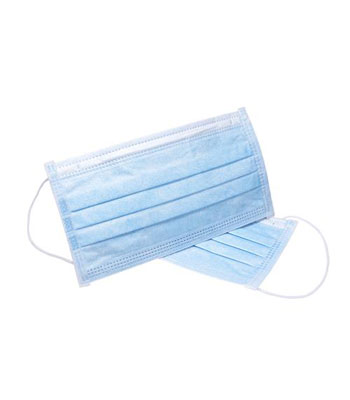
With increasing of pollutants and airborne infected particles as well as respiratory infection such as influenza and Covid-19, use mask to blocking the entrance of air pollution and pathogens from breathing ways become a necessity.
Respiratory masks are made with several non-woven layers consisting of Spunbond, SMS and Meltblown that mainly made of woven polypropylene fibers. Meltblown and SMS layers play the main role in air filtering from suspended particles and dust and spunbond is the protector of middle layers in Mask.
Innovative Surgical Navigation Systems
0,00 €Description
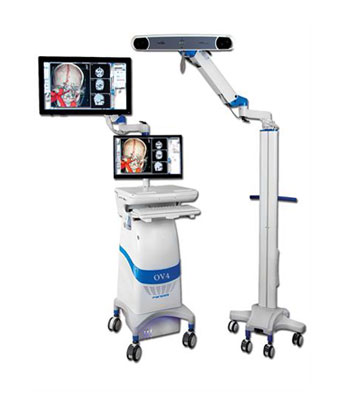
The surgical navigation system is functionally similar to the navigation system that use in airplanes or even mobile phones, which can inform us the exact position. This device will display the exact position of the surgical instruments to surgeons while surgery, from patient’s CT scan or MRI images by using its tracking system. Therefore, the surgeon can have accurate information about the position of his instrument during surgery and reach his predetermined goal according to a predetermined plan with minimal risks and complications. For instance, it fully removes the tumor, conducts a comprehensive biopsy, or avoids damaging healthy tissues around the tumor.
The advantages of using this system are summarized as follows:
1- More complete surgery (complete removal of the tumor) and therefore reduce the likelihood of recurrence of the disease
2- Increase surgical accuracy, protect healthy tissues and therefore reduce surgical side effects
3- Possibility of accurate surgery (sampling of small lesions)
4- Reduce hospitalization time and return to normal life due to less invasive surgery
5- Increase patient safety
Surgical Robot
0,00 €Introduction
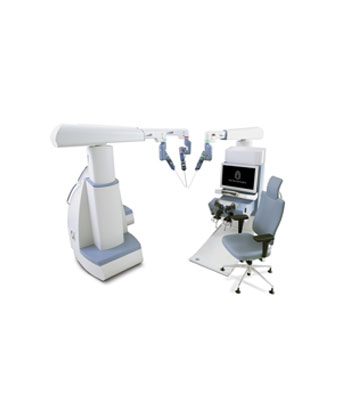
SinaFlex is a robotic surgery system which can be used for performing abdominal surgery operations in an ergonomic posture for surgeon and also remotely through internet or other communication channels. This system has two main subsystems including a master robotic console at the surgeon’s side and a slave robotic system at patient’s side. The master robots receive the surgeon’s hands movements and transmit them to the patient’s side robots that mimic the surgeon’s hand movements in a real-time manner. Simultaneously, the slave robots measure the robot and patient interaction forces/torques, including the pinch forces under instruments jaws and transmit them to the surgeon’s side master robotic system.
As a result, all tool-tissue interaction forces are fed backed to the surgeon’s hands. This system has the advantages of high accuracy and quality of surgery, less incision for patients and more ergonomic posture for surgeons.
Structural Lightweight Concrete (NSLC-1230)
0,00 €Introduction
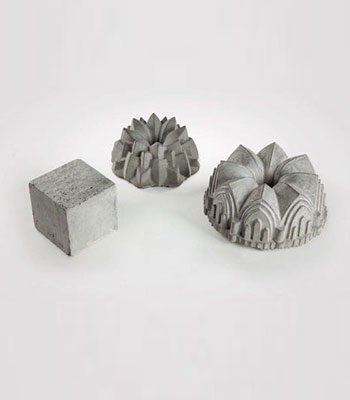
Structural lightweight concrete has an in-place density on the order of 1400 to 1900 kg/m3 compared to normal-weight concrete with a density in the in the range of 2000 to 2400 kg/m3. For structural applications, the concrete strength should be greater than 17 MPa. The concrete mixture is made with lightweight coarse aggregate. In some cases, a portion or the entire fine aggregate may be a lightweight product. Lightweight aggregates used in structural lightweight concrete are typically expanded shale, clay or slate materials that have been fired in a rotary kiln to develop a porous structure.
UPVC Rainwater Pipe
0,00 €Introduction
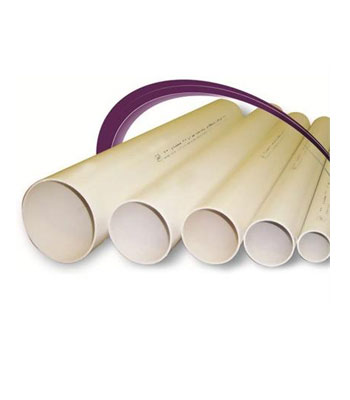
Rainwater pipes are used to transfer the rain and snow water from roof of the buildings. Polyvinyl chloride (PVC) is kind of useful plastics in construction and buildings. By adding lubricants, this material will become softer and more flexible than plastics. If no lubricant and plasticizer is added, UPVC is obtained. Chemical resistance of this polymer makes it interesting for a variety of industries especially pipe industry. Usage of UPVC includes sewer pipelines, water mains and potable water services, power and telecommunication cables. These pipes are supposed to have chemical and corrosion resistance, high elasticity module and toughness, long term tensile strength and abrasion resistance, but they may become brittle exposed to cold atmosphere. In addition, they tend to deform and lose their strength in high temperature conditions. These pipes have been given better properties by addition of nanoparticles.
UPVC Nanocomposite Profiles
0,00 €Introduction
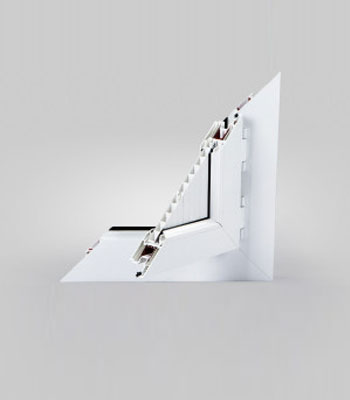
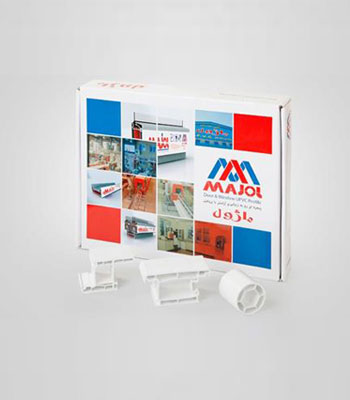
This product is unplasticized polyvinyl chloride (UPVC) nanocomposite profile containing nanoparticles. UPVC is among the widely used polymers in building construction which is the more suitable option compared to metal and wooden profiles due to features such as high durability and performance, easy formability, low thermal expansion, prevention of the energy loss and non-flammability. However, the brittleness and loss of color during exposure to UV radiation are some disadvantages of these profiles. as a solution, nanomaterials are added to the UPVC which improve the impact strength of the product.
Concrete Pavement Block
0,00 €Introduction
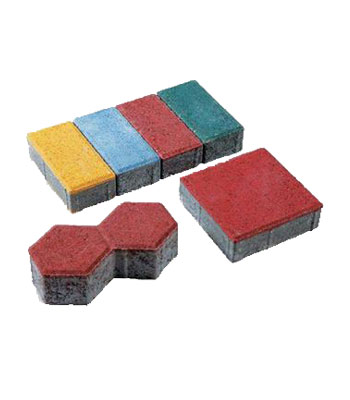
Concrete is unique in construction and it is only an exclusive product for trading; so it involves a significant share of research and development, and income in the industry to itself. Concrete, a multi-phase, complex and nanostructured material, is a composite structure mainly composed of cement and water. Nanoscience and nanoengineering of concrete are phrases which describe two essential approaches regarding the application of nanotechnology in concrete. Up to now, concrete has been primarily known as a structural material. Nanotechnology is capable of making a multi-functional material from concrete. Concrete can be nanoengineered by incorporating nanoscale building blocks, nanoparticles, nanotubes, etc.
Silent Sewage Pipes
0,00 €Introduction
UPVC Door and Window Profiles containing Nanoparticles
0,00 €Introduction
Turbine Inlet Air Filter
0,00 €Introduction
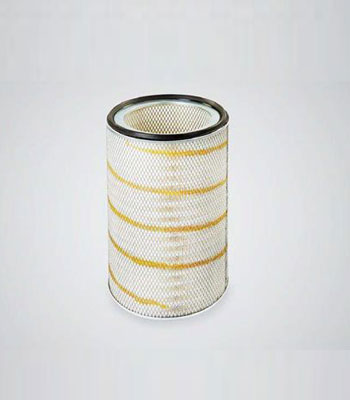
Air filters are used to prevent damage to power plant equipment through dust particles, contaminants and other harmful particles in the air. The main goal is the maximum absorption of dust particles from the air. Nanofibers with lower thickness and higher specific surface area than that of conventional fibers have many applications in filtration and electrospinning is the most efficient process for production of continuous fibers from synthetic or natural polymers. Electrospinning is used to improve the performance and efficiency of the filter. This technology while increases the efficiency of dust absorption, avoid high pressure drop. Fibers produced by electrospinning have a diameter of less than 100 nm and cover the surface of the filter paper uniformly.
Sina Ampholeish
0,00 €Introduction
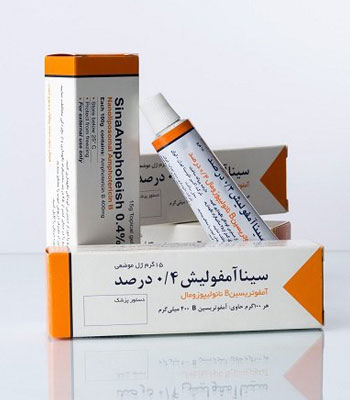
This product is a topical nanoliposomal gel 0.4% amphotericin B which produced for the treatment of cutaneous leishmaniasis and can be topically applied. Amphotericin B is the most effective drug for the treatment of fungal and protozoan infections such as leishmaniasis. Due to renal toxicity caused by this drug, liposomal formulations can be used for targeted drug delivery. The liposomal form of this drug reduces its destructive effects on the body and increases its penetration and transfer to the surface of the fungi.
